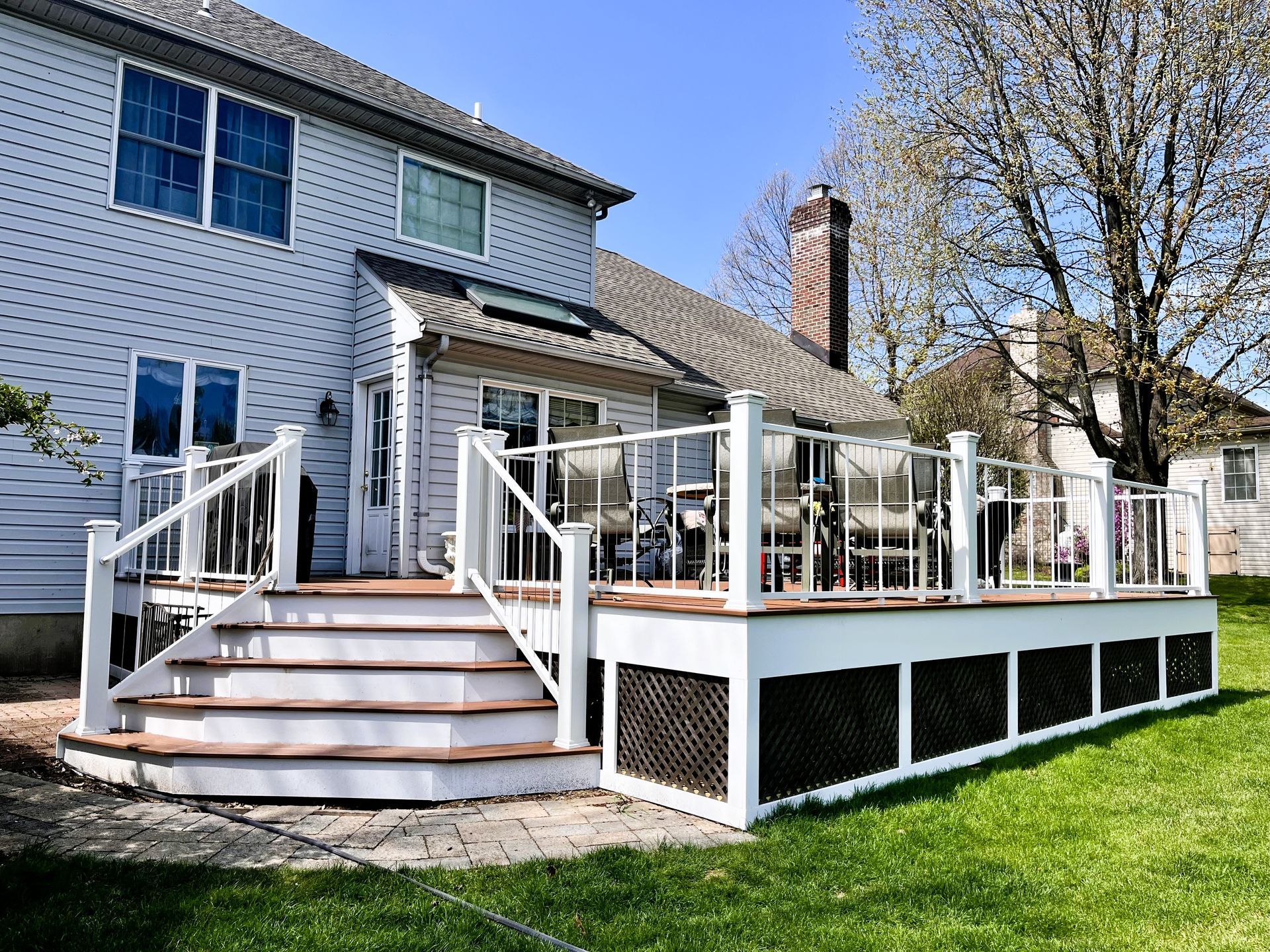
Preventing Dangerous Ledger Board Failure On Second Story Decks
Garloff Carpentry, LLC. • September 16, 2026
A sudden structural collapse is the absolute worst case scenario for any residential property owner. When a raised platform completely detaches from a house, the failure almost always starts at a single connection point. The crew at Garloff Carpentry, LLC investigates these structural hazards during deck renovations across Berks County. Understanding how your outdoor space attaches to your home is the only way to prevent a catastrophic accident.
The piece of framing that anchors your entire deck to your house is called the ledger board. This thick piece of lumber carries half the total weight of the structure and the people standing on it. If water gets behind this board and rots the house framing, the entire system pulls away from the wall. Inspecting this critical junction guarantees your family stays safe during heavy backyard use.
What We Cover:
1. The Physics Of Deck Separation
2. Why DIY Flashing Makes Water Damage Worse
3. Proper Fastening Standards For Heavy Loads
4. Spotting The Early Warning Signs
The Physics Of Deck Separation
A second story deck wants to naturally pull away from the house due to gravity and shifting ground below the posts. The ledger board must resist thousands of pounds of outward pulling force every single day. This heavy timber gets bolted directly into the rim joist of your house foundation to create a secure anchor. When the connection weakens, the outer posts act like a hinge and the entire platform swings downward.
→ A quick tip to remember: Water is the true enemy of a ledger board, not just the physical weight on top of it.
Rainwater running down the siding of your house naturally hits the top edge of this board. If that water sneaks behind the ledger, it slowly rots the wooden rim joist of your actual house. Once the house framing turns soft, the heavy lag screws lose their grip and simply pull right out of the wall.
Why DIY Flashing Makes Water Damage Worse
Flashing is the sheet metal barrier designed to kick water over the ledger board instead of behind it. Homeowners and cheap handymen often try to fix flashing leaks by pumping massive amounts of silicone caulk into the gap. This misguided DIY approach creates a sticky dam that blocks water from draining out naturally. The trapped moisture sits directly against the house framing and causes severe fungal rot in a matter of months.
→ From a professional standpoint: Caulk is never a permanent substitute for properly bent galvanized metal flashing.
Proper metal flashing must tuck underneath the house siding and physically overlap the top of the ledger board. This creates an impenetrable shingle effect that forces water to flow harmlessly down to the ground. We rip out miles of failed caulking jobs during custom deck replacements because they always accelerate the decay process.
Proper Fastening Standards For Heavy Loads
Holding up tons of lumber and human weight requires heavy duty industrial fasteners spaced at exact intervals. You can never use standard construction screws or roofing nails to attach a ledger board to a home. The building code dictates exactly how deep the fasteners must penetrate into the house framing to resist shear strength forces.
How do you know if a deck ledger board is securely attached?
You can verify a secure attachment by checking for heavy galvanized lag screws or thick structural through bolts spaced regularly along the board. There should be a staggered zigzag pattern of these heavy bolts every twelve to sixteen inches across the entire length of the timber. If you only see small nail heads or standard wood screws, the structure is actively dangerous and requires immediate professional reinforcement.
Spotting The Early Warning Signs
Catching a failing ledger connection requires looking closely at the gap between the house and the deck boards. The warning signs appear slowly over time before a total separation occurs. Homeowners must physically walk underneath the platform and shine a bright light up at the house connection to spot the red flags.
Look for a widening gap between the ledger board and the siding of the home. Even a quarter inch of separation means the lag screws are slowly pulling out of the rotted wood. You might also notice heavy black water stains running down the foundation wall directly beneath the deck. If the floor inside your house feels bouncy near the back door, the rim joist itself may already be compromised.
Secure Your Deck Structure Today
You cannot afford to guess about the structural integrity of a raised platform attached to your home. Reinforcing a failing connection early prevents massive property damage and keeps your family out of danger. Contact our office immediately to schedule a full structural inspection of your ledger board and heavy fasteners.
Share This Blog