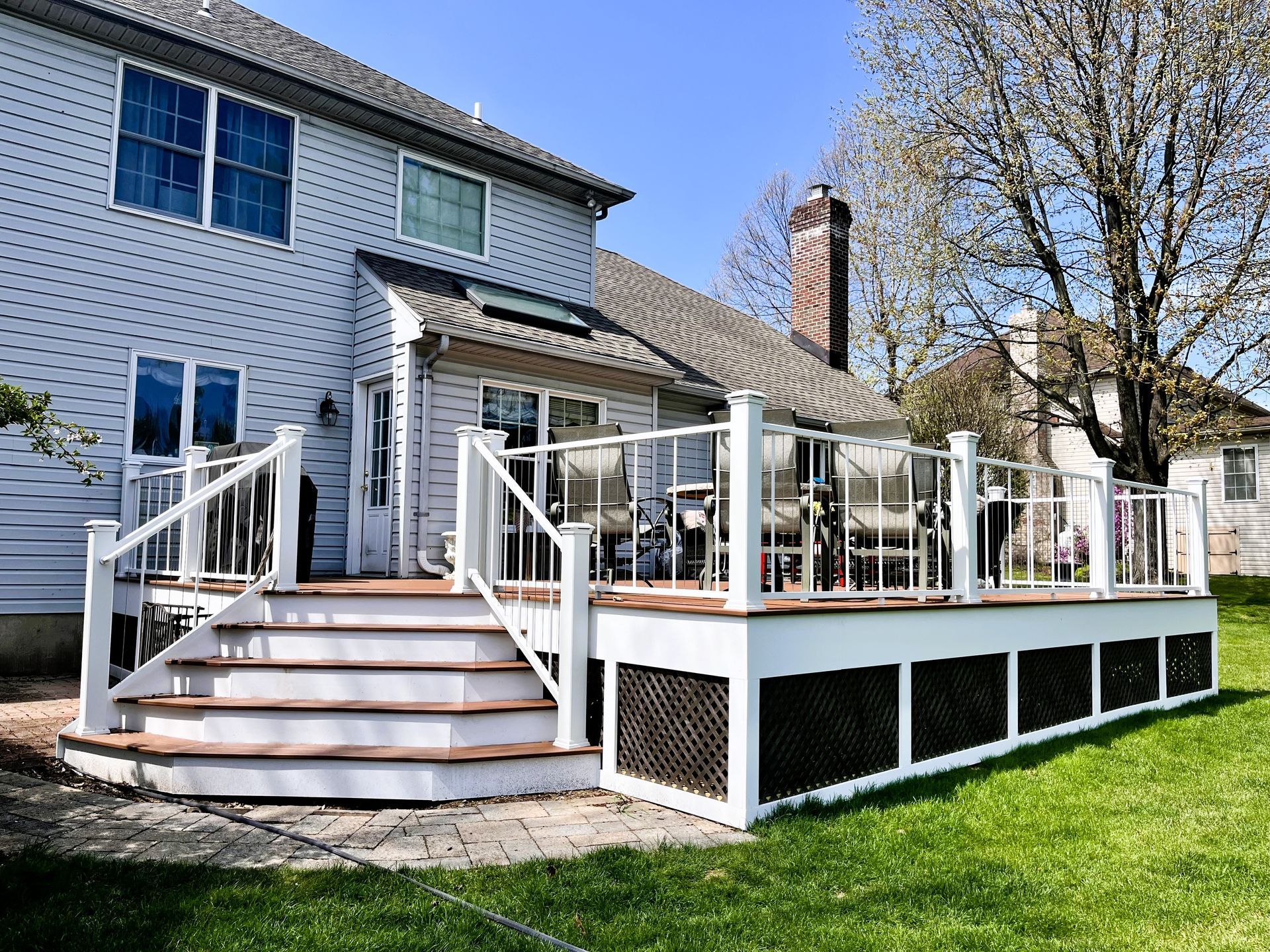
The Structural Truth About Upgrading Old Wood Decks To Composite
Garloff Carpentry, LLC. • August 19, 2026
Swapping out faded lumber for modern synthetic boards completely changes how you use your backyard. The team at Garloff Carpentry, LLC handles these exact material upgrades for homeowners across Pennsylvania. Many people falsely assume they can just rip off the old walking surface and screw heavy new materials directly into the existing wooden skeleton.
► Placing premium decking over rotting joists is the fastest way to ruin a highly expensive outdoor investment.
A successful deck remodeling project requires a deep understanding of load distribution and framing integrity. Upgrading your surface material means your substructure has to meet much stricter building codes than it did twenty years ago. Taking the time to evaluate the hidden bones of your outdoor space prevents structural sagging and catastrophic joint failures down the road. Reviewing these specific trade requirements helps Northampton County property owners make highly informed decisions before signing a construction contract.
In This Guide:
- Understanding Joist Spacing And Weight Limits
- Red Flags When Evaluating Deck Contractors
- Essential Questions To Ask Before Booking
- Preparing Your Property For A Remodel
Understanding Joist Spacing And Weight Limits
Synthetic materials are significantly heavier and far more flexible than traditional pressure treated pine boards. If the wooden joists underneath are spaced too far apart, the new premium boards will sag under the intense heat of the summer sun. You must know exactly what your frame can hold before purchasing any modern decking materials.
Can you put composite decking over an old wood frame?
You can put composite decking over an old wood frame only if the existing joists are structurally sound, completely free of rot, and spaced no more than sixteen inches apart on center. Because composite is extremely pliable when exposed to solar radiation, any spacing wider than sixteen inches guarantees a wavy and dangerous walking surface. For diagonal board installations, the spacing must be reduced to twelve inches to prevent the flexible synthetic material from bowing between the supports. A professional builder will always reinforce or sister the existing lumber to meet these strict weight requirements before laying a single new board.
Red Flags When Evaluating Deck Contractors
Hiring the wrong builder to handle your material upgrade leads to voided manufacturer warranties and dangerous structural flaws. You need a crew that understands the specific expansion and contraction rates of dense plastic composites in an outdoor environment. Watch out for these serious warning signs when speaking with local tradesmen about your upcoming property project.
→ A quick tip to remember: The warranty on your new composite boards is instantly voided if the frame underneath is not up to modern building codes.
- Ignoring The Foundation: A builder who promises to slap new boards down without physically inspecting the concrete footers and ledger board is cutting dangerous corners.
- Reusing Old Fasteners: Contractors who plan to reuse existing rusted screws or standard nails do not understand the massive sheer force that expanding composite materials generate.
- Skipping Flashing Tape: Failing to quote waterproof joist tape to protect the old framing from future ground moisture is a massive red flag in modern outdoor carpentry.
Essential Questions To Ask Before Booking
Vetting your builder protects your home from shoddy workmanship and guarantees your new outdoor space is actually safe to use year round. You need absolute certainty that the crew follows the strict installation guidelines set by the premium material manufacturers. Ask these highly technical questions before you hand over a large deposit to any local contractor.
- Expansion Gaps: Ask exactly how much space they leave between the board ends to account for thermal expansion during the hottest months of the year.
- Hidden Fasteners: Inquire if they use hidden clip systems or if they plan to face screw every board, which often leaves ugly plastic mushrooming around the screw heads.
- Permit Requirements: Check if they pull the necessary municipal permits for structural alterations, as swapping to much heavier materials often triggers a mandatory town inspection.
Preparing Your Property For A Remodel
Tearing off an old wooden surface creates a massive amount of heavy debris and exposed rusty nails in your backyard. We manage this messy demolition phase carefully during our custom deck builds, but homeowners still need to prepare the immediate area. Setting up a clear work zone helps our carpenters finish the upgrade safely and highly efficiently.
- Clear The Underneath: Remove all stored lawnmowers, landscaping tools, and scrap wood from beneath the structure so the crew can inspect the main support posts properly.
- Relocate Potted Plants: Move all heavy planters and fragile outdoor furniture completely off the platform and away from the primary walking paths leading to the yard.
- Provide Dumpster Access: Ensure your driveway is totally clear of personal vehicles so the heavy demolition dumpster can be dropped exactly where the crew needs it.
Schedule Your Structural Framing Evaluation
Getting your foundation properly checked by a professional guarantees your new synthetic boards will look perfectly flat and structurally flawless. Understanding these critical weight requirements means you can confidently invest in a premium surface that actually lasts for decades. Reach out to our office today to book a framing inspection and discuss your material upgrade options.
Share This Blog